
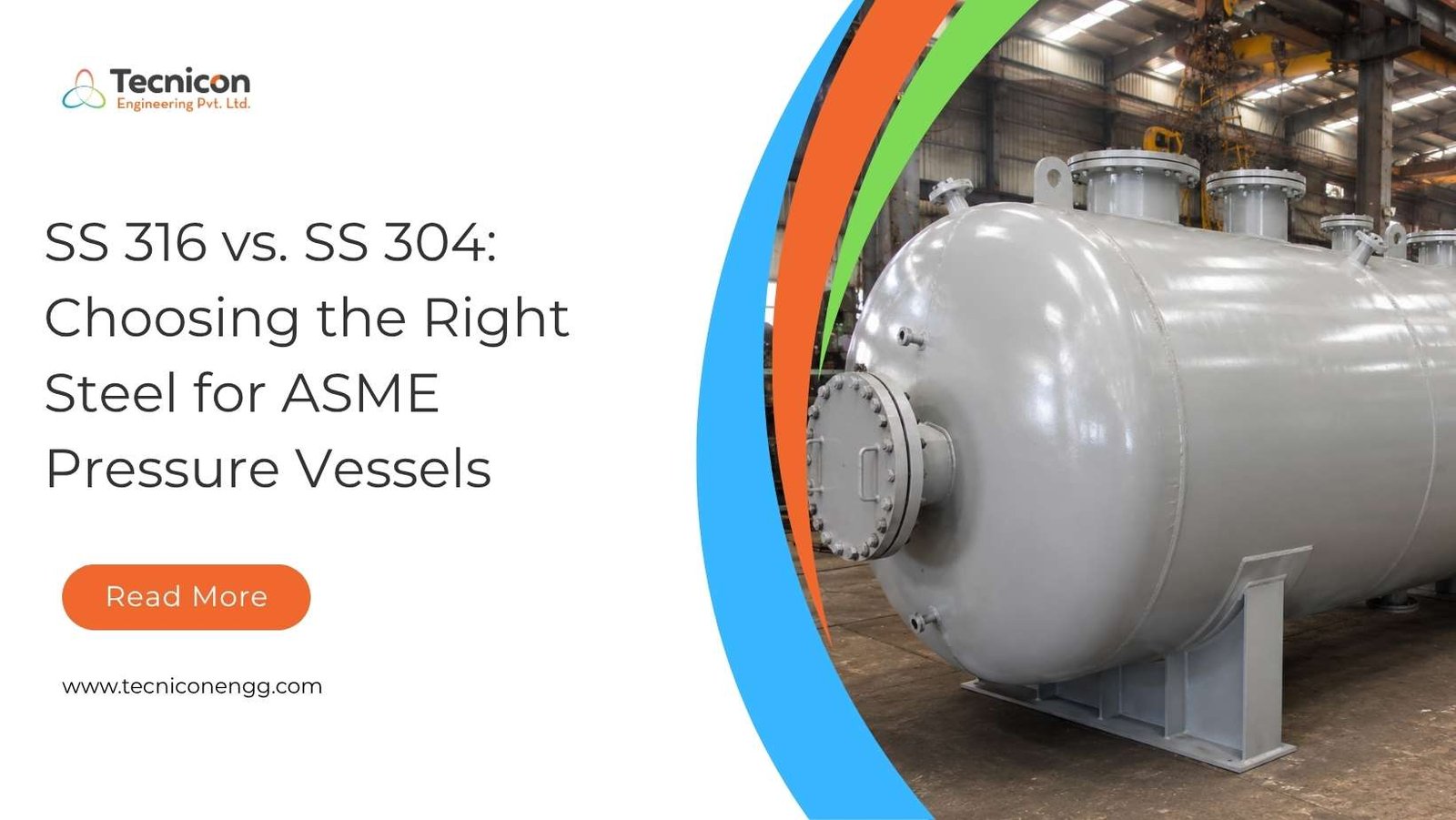
SS 316 vs. SS 304: Choosing the Right Steel for ASME Pressure Vessels
Choosing between SS 316 and SS 304 for an ASME pressure vessel comes down to one core question: what will the vessel actually be exposed to over its service life? Both are austenitic stainless steels used widely in pressure vessel fabrication, and both meet ASME material requirements, but they behave differently once chlorides, acids, or aggressive process chemicals enter the picture. The practical differences between SS 316 and SS 304, where each grade holds up best, and how to decide which one is right for your ASME pressure vessel.
What Is SS 304?
SS 304 is the most widely used austenitic stainless steel grade, valued for its combination of corrosion resistance, formability, and relatively lower cost compared to higher-alloy grades. It contains roughly 18% chromium and 8% nickel, which gives it strong resistance to oxidation and general corrosion in a wide range of environments, including many food, pharmaceutical, and general chemical processing applications.
SS 304 performs well in most atmospheric and mildly corrosive conditions, but it is more vulnerable to pitting and crevice corrosion when exposed to chloride-containing environments, such as saline water, certain cleaning agents, or process streams with dissolved chlorides.
What Is SS 316?
SS 316 shares the same base chromium-nickel composition as SS 304 but adds molybdenum, typically 2% to 3%. That addition is what gives SS 316 its improved resistance to pitting and crevice corrosion, particularly in chloride-rich environments. This makes SS 316 the preferred choice for pressure vessels handling saline solutions, certain acids, marine environments, and pharmaceutical or specialty chemical processes where higher purity and corrosion resistance are required.
SS 316 typically costs more than SS 304 due to the added molybdenum content, and that cost difference is one of the main factors plant engineers weigh when selecting material for a new vessel.
SS 316 vs. SS 304: Key Differences
| Factor | SS 304 | SS 316 |
| Alloy composition | ~18% chromium, ~8% nickel | ~16-18% chromium, ~10-14% nickel, 2-3% molybdenum |
| Chloride resistance | Moderate | Higher, due to molybdenum content |
| Pitting and crevice corrosion resistance | Lower | Higher |
| Cost | Generally lower | Generally higher |
| Formability and weldability | Excellent | Excellent, comparable to SS 304 |
| Typical service | General chemical, food, mild environments | Pharma, marine, chloride-rich or acidic environments |
| ASME code compliance | Meets ASME material specifications | Meets ASME material specifications |
| Mechanical strength at elevated temperature | Good | Slightly improved in some ranges |
Corrosion Resistance
The molybdenum in SS 316 is the key differentiator when it comes to corrosion resistance. In environments with chlorides, whether from process fluids, cleaning chemicals, or even coastal atmospheric exposure, SS 304 is more prone to localized pitting that can eventually compromise vessel integrity. SS 316 resists this type of attack more effectively, which is why it is the standard choice for vessels handling brine, certain acids, and pharmaceutical processes where both purity and long-term durability matter.
For general dry chemical service, mild processing environments, or applications without significant chloride exposure, SS 304 often provides adequate corrosion resistance without the added cost of SS 316.
Mechanical Properties and Fabrication
Both grades weld and form similarly well, and both are readily available in plate, pipe, and forged fitting form suitable for ASME pressure vessel fabrication. Neither grade presents major fabrication challenges compared to the other, so the material decision usually comes down to corrosion resistance and cost rather than manufacturability.
Cost Considerations
SS 316 typically costs more than SS 304, sometimes significantly, depending on current nickel and molybdenum market pricing. For vessels where SS 304 provides sufficient corrosion resistance for the intended service, specifying SS 316 adds cost without a meaningful performance benefit. However, for vessels where premature corrosion could lead to costly downtime, contamination risk, or safety concerns, the additional cost of SS 316 is often justified by the extended service life and reduced maintenance.
ASME Requirements for Pressure Vessel Materials
ASME Boiler and Pressure Vessel Code, Section VIII, governs the design, material selection, and fabrication requirements for pressure vessels. Both SS 304 and SS 316 are listed as acceptable materials under ASME specifications, provided the material meets the required certification, mill test reports, and allowable stress values for the intended design temperature and pressure.
Material selection under ASME still requires the vessel designer to account for the specific process conditions, including temperature, pressure, and the corrosive properties of the contained fluid, since code compliance confirms the material is permitted for pressure vessel use, not that it is automatically the right choice for a given corrosive service.
How to Choose Between SS 316 and SS 304 for Your Pressure Vessel
- What fluid will the vessel contain?
Chloride-bearing fluids, certain acids, and saline environments generally call for SS 316. - What is the operating environment?
Coastal or humid, chloride-rich atmospheres can accelerate corrosion on SS 304 even if the internal process fluid is benign. - What is the required service life?
Vessels expected to run for decades with minimal maintenance often justify the added cost of SS 316. - Are there purity requirements?
Pharmaceutical and specialty chemical processes frequently specify SS 316 for its corrosion resistance and reduced risk of surface degradation over time. - What is the project budget?
For general, non-chloride, moderately corrosive service, SS 304 often delivers adequate performance at a lower material cost.
Frequently Asked Questions
Is SS 316 always better than SS 304 for pressure vessels? Not necessarily. SS 316 offers better chloride and pitting resistance, but for many general applications without significant chloride exposure, SS 304 performs reliably at a lower cost. The right choice depends on the specific process fluid and environment.
Can SS 304 be used for pharmaceutical pressure vessels?
SS 304 can be used in some pharmaceutical applications, but SS 316 is more commonly specified due to its superior corrosion resistance and suitability for processes involving cleaning agents, saline solutions, or higher purity requirements.
Does ASME code require a specific stainless steel grade?
No. ASME Boiler and Pressure Vessel Code, Section VIII, permits both SS 304 and SS 316 as acceptable materials, provided the design accounts for the correct allowable stress values and material certification for the intended service conditions.
What is the price difference between SS 316 and SS 304?
The price difference varies with market conditions for nickel and molybdenum, but SS 316 is generally more expensive than SS 304 due to its additional alloying elements.
Are there other stainless steel grades used for pressure vessels?
Yes, depending on the application, duplex stainless steels, SS 321, or higher-alloy grades may be used for specialized high-temperature, high-corrosion, or high-strength requirements beyond what SS 304 or SS 316 provide.
Conclusion
SS 316 and SS 304 both meet ASME requirements for pressure vessel fabrication, but they are not interchangeable once chloride exposure, acid resistance, or long-term durability become priorities. SS 304 offers reliable performance and lower cost for general and moderately corrosive service, while SS 316 provides meaningfully better resistance to pitting and crevice corrosion in chloride-rich or pharmaceutical-grade applications. Selecting the right grade comes down to understanding the specific process fluid, operating environment, and expected service life of the vessel.
If you’re specifying material for an upcoming ASME pressure vessel project, working with an experienced pressure vessel manufacturer can help match the steel grade to your actual process conditions rather than a default specification. Tecnicon Engineering designs and fabricates ASME-compliant pressure vessels in both SS 304 and SS 316 in Ahmedabad, Gujarat, for chemical, pharmaceutical, and industrial processing applications, and can help you determine the right material for your project.
Tags: Engineering