
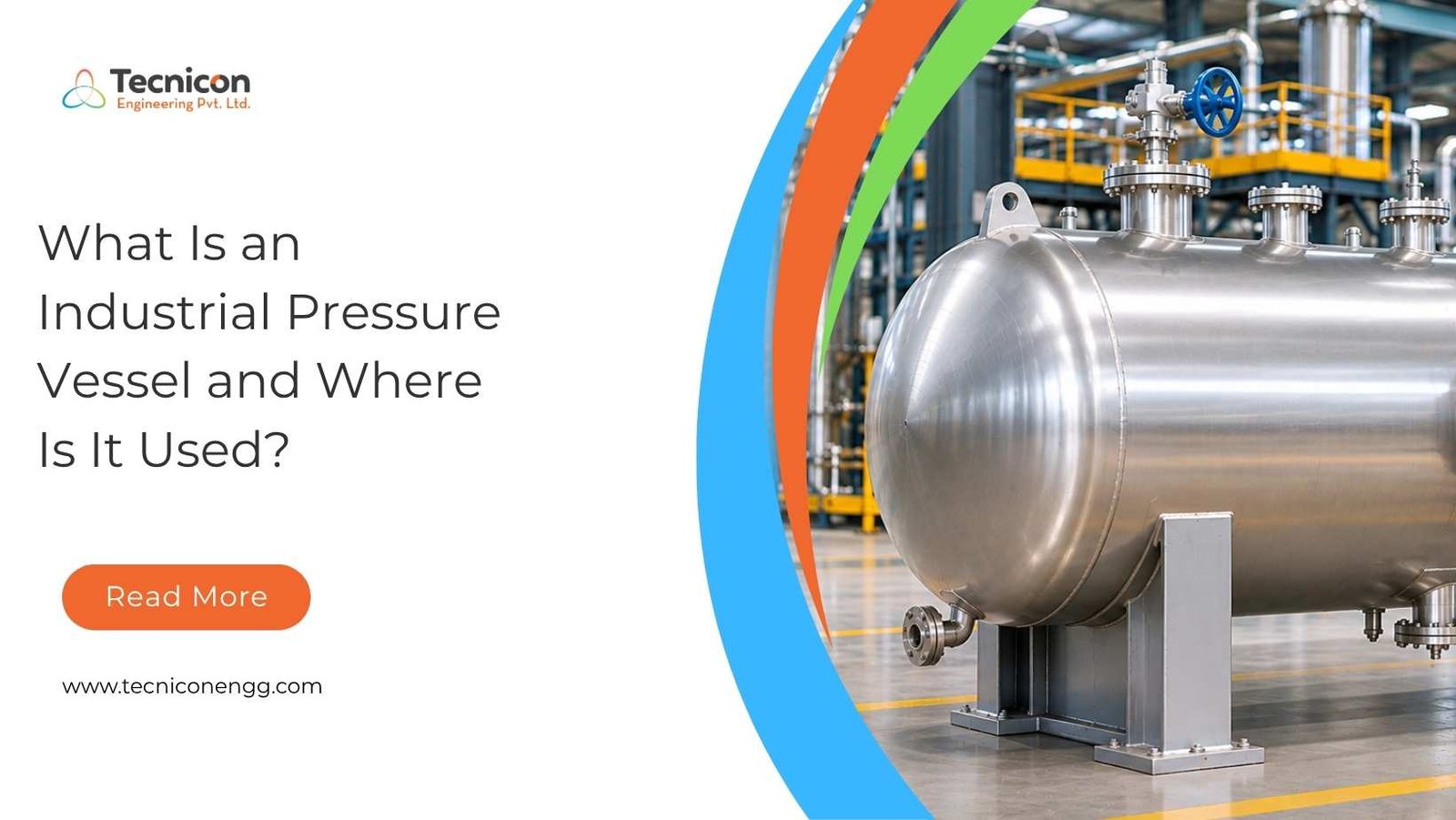
What Is an Industrial Pressure Vessel and Where Is It Used?
An industrial pressure vessel is a specially designed container used to store, process, or transport gases and liquids under pressure different from atmospheric pressure. These vessels are essential components in industries such as chemical processing, pharmaceuticals, oil and gas, petrochemicals, power generation, and manufacturing.
Industrial pressure vessels are engineered to withstand specific operating pressure, temperature, and mechanical loads while maintaining structural integrity and operational safety. Depending on the application, they are manufactured using materials such as stainless steel, mild steel, SS 304, and SS 316.
From chemical storage vessels and air receiver tanks to reactor pressure vessels and industrial gas storage systems, pressure vessel equipment supports various industrial operations. Understanding their types, applications, design requirements, and manufacturing processes helps businesses select the right pressure vessel for their operational needs.
What Is an Industrial Pressure Vessel?
An industrial pressure vessel is an enclosed container designed to hold gases or liquids at a specified internal or external pressure. Unlike conventional storage tanks, pressure vessels are manufactured with specific design requirements to handle pressure loads, temperature variations, and operating conditions.
A pressure vessel tank can be designed in different configurations, including cylindrical pressure vessels, vertical pressure vessels, and horizontal pressure vessels.
These vessels are commonly used for gas storage, liquid storage, chemical processing, heat transfer, and fluid containment. Their design depends on vessel capacity, operating pressure, design temperature, material properties, and application requirements.
Main Components of a Pressure Vessel
A typical industrial pressure vessel consists of several components that work together to ensure safe pressure containment.
- Vessel Shell: The main cylindrical body that contains the pressurized gas or liquid.
- Pressure Vessel Heads: Specially shaped end sections that close the vessel and help distribute internal pressure loads.
- Nozzles: Connections used for fluid inlet, outlet, venting, and instrumentation.
- Manholes and Manways: Openings that allow internal inspection, cleaning, and maintenance.
- Support Structures: Components such as legs, saddles, and skirts that provide mechanical stability.
- Safety Valves: Protective devices that release excess pressure when operating limits are exceeded.
Proper engineering and fabrication of these components are essential for maintaining vessel strength and reliability.
Where Are Industrial Pressure Vessels Used?
Industrial pressure vessels are used across industries that require controlled storage, processing, and handling of pressurized gases and liquids.
1. Chemical Processing Industry
Chemical manufacturing plants use chemical pressure vessels for storing, mixing, heating, and processing different chemical substances.
Reactor pressure vessels are particularly important for controlled chemical reactions under specific operating pressure and temperature conditions. Depending on the chemical composition, manufacturers select corrosion-resistant materials such as SS 304 and SS 316.
A pressure vessel for the chemical industry must consider chemical compatibility, corrosion resistance, pressure requirements, and temperature variations.
2. Pharmaceutical Industry
The pharmaceutical industry uses pressure vessels for liquid processing, formulation, mixing, and storage applications.
A pressure vessel for the pharmaceutical industry may require stainless steel construction, hygienic surface finishes, and easy cleaning arrangements. SS 316 is commonly considered for applications requiring enhanced corrosion resistance.
3. Oil and Gas Industry
Pressure vessels play an important role in oil and gas processing facilities. They are used for gas separation, storage, filtration, and process fluid handling.
Industrial gas storage vessels and high-pressure containers are designed according to specific pressure ratings and operating conditions.
4. Power Generation Industry
Power plants use pressure vessel equipment in steam systems, boilers, condensate systems, and compressed air applications.
These vessels help manage pressurized fluids and support reliable operation of industrial power generation equipment.
5. Manufacturing and Compressed Air Systems
Manufacturing facilities commonly use air receiver tanks and compressed air storage tanks to store compressed air and maintain a stable air supply.
These pressure vessel tanks help reduce pressure fluctuations and support pneumatic machinery, production equipment, and industrial automation systems.
What Are the Different Types of Industrial Pressure Vessels?
Pressure vessels are available in different designs depending on their orientation, material, pressure requirements, and intended application.
1. Vertical Pressure Vessel
A vertical pressure vessel is installed in an upright position and is commonly used where floor space is limited. It is suitable for chemical processing, gas separation, and industrial storage applications.
2. Horizontal Pressure Vessel
Horizontal pressure vessels are installed parallel to the ground and are widely used for compressed air storage, gas processing, and liquid storage applications.
3. Stainless Steel Pressure Vessel
Stainless steel pressure vessels are manufactured using materials such as SS 304 and SS 316. They are suitable for applications requiring corrosion resistance, durability, and compatibility with specific process fluids.
4. Mild Steel Pressure Vessel
Mild steel pressure vessels are commonly used in applications involving compressed air, industrial gases, and compatible process fluids. Their suitability depends on operating conditions, corrosion protection, and design requirements.
5. Chemical and Reactor Pressure Vessels
Chemical storage vessels and reactor pressure vessels are designed for specific processing requirements, including mixing, heating, cooling, and controlled chemical reactions.
How Are Industrial Pressure Vessels Designed and Manufactured?
Pressure vessel manufacturing involves engineering calculations, material selection, fabrication, inspection, and testing to ensure safe operation.
Step 1: Pressure Vessel Design
The design process begins by identifying operating pressure, design pressure, operating temperature, design temperature, vessel capacity, and the properties of the stored fluid.
Engineers perform stress analysis to determine the required wall thickness and evaluate the vessel’s ability to withstand internal pressure, external pressure, and other mechanical loads.
Step 2: Material Selection
Material selection depends on pressure requirements, temperature conditions, chemical compatibility, and corrosion resistance.
Common materials include:
- SS 304 and SS 316 for corrosion-resistant applications.
- Mild steel for suitable industrial storage and compressed air applications.
- Other specified alloys for demanding process environments.
Step 3: Pressure Vessel Fabrication
Pressure vessel fabrication includes cutting, rolling, forming, welding, and assembling the shell, heads, nozzles, and other components.
Qualified welding procedures and appropriate fabrication practices are important for maintaining structural integrity.
Step 4: Inspection and Testing
Before commissioning, pressure vessel equipment undergoes quality checks and applicable inspection procedures.
These may include dimensional inspection, welding inspection, non-destructive testing, and hydrostatic testing. Testing requirements depend on the applicable design code and project specifications.
What Standards Are Important in Pressure Vessel Manufacturing?
Pressure vessel design and manufacturing must follow applicable engineering codes, safety regulations, and project requirements.
The ASME Boiler and Pressure Vessel Code (BPVC), particularly Section VIII, provides requirements for the construction of pressure vessels within its scope.
Other applicable requirements may include material specifications, welding procedures, inspection standards, and statutory regulations.
Businesses selecting an ASME pressure vessel manufacturer in India should verify relevant code compliance, manufacturing capabilities, quality documentation, and inspection procedures rather than relying only on general certification claims.
How to Choose the Right Industrial Pressure Vessel Manufacturer?
Selecting an experienced industrial pressure vessel manufacturer is essential for equipment safety, durability, and long-term performance.
Consider the following factors before selecting a manufacturer:
- Engineering Experience: Evaluate experience in pressure vessel design, engineering calculations, and industrial applications.
- Material Expertise: Confirm the ability to manufacture stainless steel, SS 304, SS 316, and mild steel vessels according to project requirements.
- Fabrication Capabilities: Review welding processes, fabrication facilities, and quality control procedures.
- Code Compliance: Check experience with applicable ASME requirements and relevant statutory regulations.
- Inspection and Testing: Ensure proper welding inspection, non-destructive testing, and hydrostatic testing capabilities.
- Customization: Choose a manufacturer capable of developing equipment according to specific vessel capacity, pressure rating, and process requirements.
Businesses looking for an industrial pressure vessel manufacturer in India should also evaluate project experience, technical support, delivery capabilities, and after-sales services.
For industrial buyers in Ahmedabad and Gujarat, selecting a reliable pressure vessel manufacturer Gujarat can help simplify engineering coordination, fabrication, and equipment procurement.
Conclusion
Industrial pressure vessels are essential process equipment used for storing, processing, and handling pressurized gases and liquids across multiple industries. From chemical processing and pharmaceutical manufacturing to oil and gas facilities and power generation, these vessels support safe and controlled industrial operations.
Their performance depends on proper pressure vessel design, material selection, fabrication quality, inspection, and testing. Selecting an experienced industrial pressure vessel manufacturer in India helps ensure that equipment meets specific operating conditions, engineering requirements, and applicable safety standards.
A properly designed and manufactured pressure vessel provides reliable pressure containment, operational efficiency, and long-term performance in demanding industrial environments.