
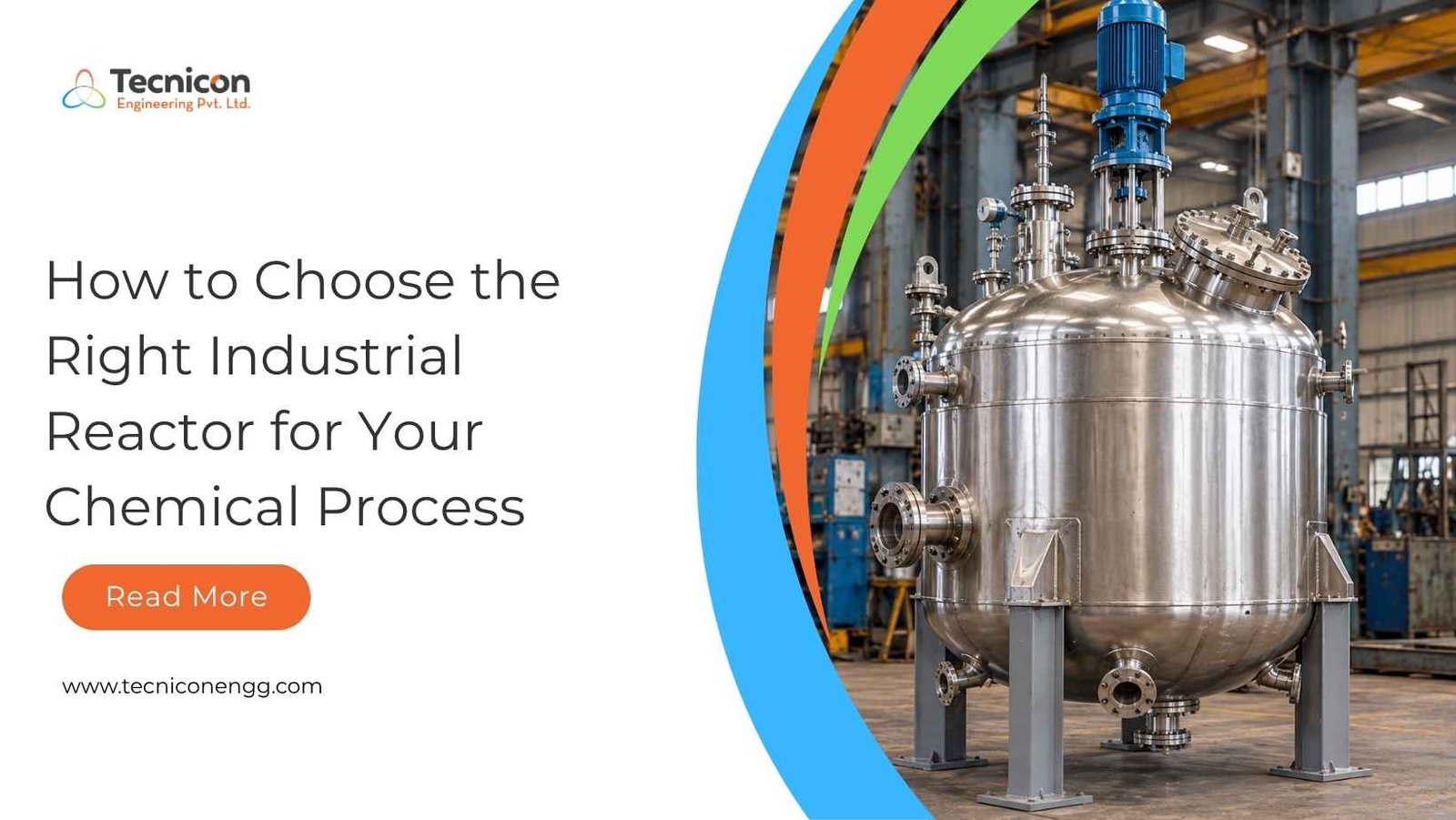
How to Choose the Right Industrial Reactor for Your Chemical Process
The right industrial reactor is the one that matches your reaction chemistry, operating temperature and pressure, batch size, and material compatibility. Getting these factors right protects product quality, plant safety, and process efficiency. Getting them wrong can mean poor yields, corrosion, frequent shutdowns, or costly modifications.
how to select a chemical process reactor, from reaction requirements and reactor material selection to agitation, heat transfer, and choosing a reliable industrial reactor manufacturer.
Start with Your Chemical Reaction Requirements
Every selection decision begins with the reaction itself. Before comparing reactor types or quotations, define:
- Reactants, solvents, catalysts, and products involved
- Whether the reaction is exothermic or endothermic
- Required operating temperature and operating pressure
- Reaction time and expected viscosity changes
- Whether solids, gases, or multiple phases are present
- Hazards such as flammability, toxicity, or corrosiveness
These details determine the reactor configuration, the heat transfer requirements, and the safety features needed. A clear process data sheet shared with your chemical reactor manufacturer allows for accurate reaction vessel design from the start.
Batch vs Continuous Reactors: Which Is Right for You?
The first major choice is between batch processing and continuous processing.
Batch reactor systems suit multi-product plants, smaller volumes, and processes that need flexibility. Pharmaceuticals, agrochemicals, dyes, and specialty chemicals commonly use batch operation because one vessel can handle different recipes.
Continuous reactors suit high-volume, steady-state production of a single product. They offer consistent output and can improve process efficiency, but they need more upfront engineering and are less flexible when products change.
A stirred tank reactor is the most common choice for batch work, while continuous operation may use continuous stirred tank or tubular designs. If you run frequent product changeovers, batch is usually the practical starting point.
Reactor Material Selection and Chemical Compatibility
Material choice directly affects reactor life, product purity, and safety. Chemical compatibility should be checked against every substance the vessel will contact, including cleaning agents.
| Material | Typical Use |
| Mild steel (MS) reaction vessel | Non-corrosive services, general-purpose applications |
| SS 304 reaction vessel | Mildly corrosive media, food and general chemical use |
| SS 316 reaction vessel | Chlorides, acids, and more aggressive process conditions |
| Glass-lined or alloy construction | Highly corrosive services |
A stainless steel reactor vessel is widely used because it offers good corrosion resistance and is easy to clean. However, the correct grade depends on your specific chemistry, so confirm compatibility with your process team and manufacturer instead of assuming one grade fits all. A corrosion resistant reactor built in the wrong material can fail early, even if its design is otherwise sound.
Heat Transfer and Jacket Design
Many reactions need tight temperature control. The heating or cooling method is built into the vessel design:
- Jacketed reaction vessel: A shell around the vessel carries steam, hot oil, chilled water, or brine. It suits most standard heating and cooling duties.
- Limpet coil reactor: Half-pipe coils welded to the outer wall handle higher pressures and give strong heat transfer with a thinner shell.
- Internal coils: Add surface area for demanding exothermic reactions, though they complicate cleaning.
Match the heat transfer method to your reaction’s heat load and the utility medium available at your plant.
Agitation Requirements
Mixing affects reaction rate, uniformity, and heat transfer. A reactor with agitator should be configured according to fluid viscosity, solids content, and mixing goals.
Common agitator types include anchor, paddle, turbine, and pitched-blade designs. Low-viscosity liquids generally work with turbine or pitched-blade impellers, while thick or viscous mixtures often need anchor or paddle designs. Seal selection, whether mechanical seal or gland packing, should reflect pressure, temperature, and leak tolerance.
Selecting Reactor Capacity
Reactor capacity should reflect your production target, but not simply by matching batch volume to vessel volume. Allow headspace for foaming, vapor expansion, and agitation, since vessels are typically not filled to their full geometric volume.
Consider:
- Required batch size and number of batches per day
- Working volume versus total volume
- Future capacity expansion
- Cleaning and turnaround time between batches
Slightly planning ahead for growth is often more economical than replacing an undersized vessel later.
Pressure and Vacuum Considerations
Some processes demand a high pressure reactor or pressure reactor, while others run under vacuum. A vacuum reactor vessel needs structural design that withstands external pressure without deformation. Pressure vessels must follow recognized design codes and undergo appropriate testing.
Share your maximum design pressure, temperature, and any vacuum duty with your manufacturer so the shell thickness, nozzles, and safety devices are specified correctly.
Fabrication Standards and Quality
Reactor fabrication standards matter as much as design. Look for a manufacturer that follows recognized pressure vessel codes, maintains weld procedures and qualified welders, and provides documentation such as material test certificates and inspection reports.
Typical quality checks include:
- Material verification
- Weld inspection and non-destructive testing, where applicable
- Hydrostatic pressure testing
- Surface finish checks, particularly for hygienic or high-purity service
Choosing an Industrial Reactor Manufacturer in India
Capability in reactor design and fabrication is the main criterion, but practical support also counts. A strong chemical reactor manufacturer in India should be able to offer custom designs, handle different materials, and support installation and after-sales needs.
Gujarat is among India’s leading chemical and pharmaceutical manufacturing regions, which makes working with an industrial reactor manufacturer in Ahmedabad or a reactor vessel manufacturer in Gujarat convenient for many plants. Proximity makes it easier to review drawings, inspect fabrication progress, and arrange servicing.
When evaluating suppliers, ask about their experience with similar chemistries, their testing facilities, and whether they provide custom chemical reactors built to your process data sheet.
Conclusion
Choosing the right industrial reactor starts with understanding your chemical process: the reaction requirements, batch or continuous operation, material compatibility, heat transfer needs, agitation, capacity, and pressure conditions. Each factor shapes the final design and affects long-term performance.
Work from a detailed process data sheet, confirm material grades against your chemistry, and select a manufacturer with proven fabrication standards. If you are planning a new reactor or upgrading existing equipment, discussing your requirements with an experienced chemical process equipment manufacturer in India is a practical way to arrive at a safe, efficient, and well-engineered solution.