
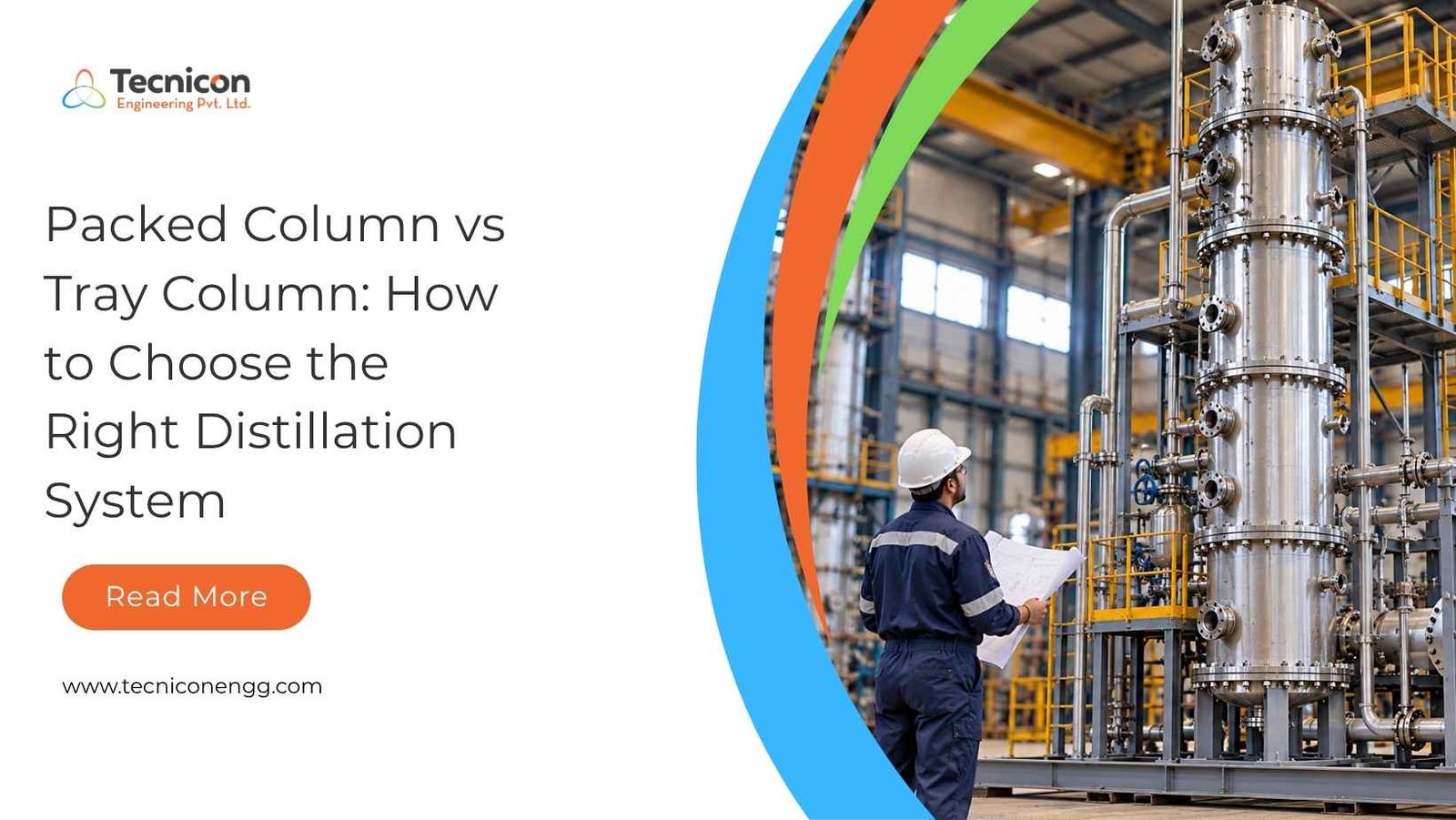
Packed Column vs Tray Column: How to Choose the Right Distillation System
The choice between a packed column and a tray column depends on operating pressure, liquid and vapor loads, fouling tendency, product purity targets, and column diameter. Packed columns generally suit vacuum service, low pressure drop, corrosive fluids, and smaller diameters. Tray columns generally suit high liquid loads, fouling services, large diameters, and wide turndown. Neither is always better, so the right distillation system comes from matching the design to your process data.
This guide compares both options and lists the factors that matter when specifying a distillation column or choosing a distillation column manufacturer.
How a Distillation Column Works
A distillation column separates a liquid mixture by exploiting differences in volatility. Vapor rises while liquid flows down, and the two phases meet repeatedly. Each contact moves lighter components into the vapor and heavier components into the liquid, improving separation efficiency and product purity.
The column internals determine how vapor liquid contact is achieved. Trays create stage-wise contact, while packing creates continuous contact over a surface. A condenser and reboiler system completes the setup by providing reflux at the top and vapor generation at the bottom.
What Is a Tray Distillation Column?
A tray distillation column contains horizontal plates stacked inside a vertical shell. Liquid flows across each tray and down through a downcomer, while vapor rises through openings in the tray deck.
Common distillation trays include:
- Sieve trays: Simple perforated plates, economical and widely used
- Valve trays: Movable valves adjust to vapor flow, giving a wider operating range
- Bubble cap trays: Suited to very low liquid rates and wide turndown, though costlier
Tray efficiency is the ratio of actual separation to ideal stage performance, so the number of real trays is always higher than the number of theoretical stages.
What Is a Packed Distillation Column?
A packed distillation column, also called a packed bed distillation column, is filled with packing material that spreads liquid into thin films and creates a large surface area for mass transfer.
- Random packing: Rings or saddles dumped into the column, available in metal, ceramic, or plastic
- Structured packing: Corrugated sheets arranged in layers, offering high efficiency and low pressure drop
Packed column internals also include liquid distributors, redistributors, support plates, and hold-down grids to prevent channeling.
Packed Column vs Tray Column: Key Differences
| Factor | Packed Column | Tray Column |
| Column pressure drop | Lower | Higher |
| Vacuum service | Well suited | Less suited |
| Fouling or solids | More sensitive | More tolerant |
| Large diameter | Distribution becomes harder | Handled well |
| Liquid hold-up | Low | Higher |
| Turndown range | Narrower, especially random packing | Wider with valve trays |
| Corrosive services | Easy to use plastic or ceramic | Needs corrosion-resistant metal |
| Cleaning and access | Harder once packing is installed | Easier through manways |
| Capital cost | Often lower for small diameters | Often lower for large diameters |
Factors That Decide the Right Distillation System
Operating Pressure and Pressure Drop
For vacuum distillation, low column pressure drop is critical because it keeps bottom temperatures down and protects heat-sensitive products. Packed columns, especially with structured packing, are usually preferred. At moderate or high operating pressure, trays perform reliably.
Vapor and Liquid Flow Rates
Vapor flow rate and liquid flow rate set the column diameter and the risk of operating problems. Tray columns handle high liquid loads well. Packed columns work best at moderate loads where liquid distribution stays uniform.
Fouling and Solids
If the feed contains solids or forms deposits, tray columns with larger openings and accessible decks are easier to run and clean. Packing can plug and is difficult to clean in place.
Corrosive Fluids
Packed columns allow non-metallic packing and linings, which helps in acidic or aggressive service. Material selection should still be checked against every fluid and cleaning agent.
Column Diameter and Height
Small columns are often cheaper and more efficient with packing. In large diameters, even liquid distribution is hard to maintain, so trays are common.
Required Separation and Turndown
High product purity may need many theoretical stages and a tall column. Structured packing can reduce height for a given separation. If your plant runs at widely varying rates, check the turndown capability of each option.
Common Operating Problems
Both designs share some problems, but they show up differently:
- Flooding: Excess liquid or vapor load stops liquid flowing down, causing a sharp rise in pressure drop and loss of separation
- Entrainment: Liquid droplets carried upward with vapor, lowering efficiency
- Weeping: Liquid leaking through tray openings at low vapor rates
- Channeling: Uneven liquid distribution in packing
A sound design keeps operation within safe limits with margin for future changes.
Can You Combine Both?
Yes. Many industrial distillation columns use trays in one section and packing in another. A common approach is trays in the high-load section and structured packing where low pressure drop is valuable. Hybrid designs also help when revamping an existing column to increase capacity or purity.
Fabrication and Material Considerations
A distillation tower is a pressure-containing vessel, so design and fabrication should follow recognized codes such as ASME Section VIII or equivalent standards. Key points include shell thickness, internals alignment, weld quality, tray levelness, nozzle placement, and pressure testing. Stainless steel grades such as 304 and 316 are common in chemical service, with other alloys for harsher duties.
Choosing a Distillation Column Manufacturer in India
Capability in process design, internals, and fabrication should guide the decision. When evaluating a distillation column manufacturer in India, check for:
- Experience with both tray and packed designs
- In-house design and drawing capability
- Qualified welding procedures and inspection facilities
- Material expertise for chemical service
- Complete documentation, including material certificates and test reports
Gujarat is one of India’s leading chemical and pharmaceutical regions, so a distillation column manufacturer in Ahmedabad or a distillation tower manufacturer in Gujarat is often close to the plants that need this equipment. This can simplify design reviews, workshop inspections, and installation support. Whether you need a custom distillation column manufacturer in India or a packed distillation column supplier in Gujarat, ask for references from similar services.
Conclusion
Packed columns and tray columns both separate liquid mixtures effectively, but they suit different conditions. Choose packing for vacuum duty, low pressure drop, corrosive fluids, and smaller diameters. Choose trays for high liquid loads, fouling services, large diameters, and wide operating range. Hybrid designs are also worth considering.
Start with complete process data: feed composition, operating pressure, flow rates, purity targets, and fouling behavior. Share these with an experienced distillation engineering team to arrive at a safe, efficient, and well-fabricated distillation system.
rewrite
Packed Column vs Tray Column: How to Choose the Right Distillation System
A packed column or a tray column can both do the job, but the better choice depends on your operating pressure, liquid and vapor loads, fouling tendency, product purity target, and column diameter. Packed columns usually suit vacuum service, low pressure drop, corrosive fluids, and smaller diameters. Tray columns usually suit high liquid loads, fouling services, large diameters, and wide turndown. The right distillation system comes from matching the design to your process data, not from picking a universal winner.
This guide compares packed column vs tray column designs and explains what to consider when specifying a distillation column or selecting a distillation column manufacturer.
How Does a Distillation Column Work?
A distillation column separates a liquid mixture based on differences in volatility. Vapor travels upward while liquid flows downward, and the two streams contact each other repeatedly. With each contact, lighter components move into the vapor and heavier components move into the liquid, which improves separation efficiency and product purity.
Column internals decide how this vapor liquid contact happens. Trays create stage-by-stage contact, while packing creates continuous contact across a large surface. A condenser and reboiler system completes the setup, supplying reflux at the top and vapor at the bottom.
What Is a Tray Distillation Column?
A tray distillation column has horizontal plates stacked inside a vertical shell. Liquid moves across each plate and drops through a downcomer to the tray below, while vapor rises through openings in the tray deck.
Common distillation trays include:
- Sieve trays: Perforated plates that are economical and widely used
- Valve trays: Movable valves that adjust to vapor flow, giving a wider operating range
- Bubble cap trays: Suited to very low liquid rates and wide turndown, though more expensive
Tray efficiency compares actual separation with ideal stage performance. Because of this, a column always needs more real trays than theoretical stages.
What Is a Packed Distillation Column?
A packed distillation column, also called a packed bed distillation column, is filled with packing material that spreads liquid into thin films and creates a large surface area for mass transfer.
- Random packing: Rings or saddles dumped into the shell, available in metal, ceramic, or plastic
- Structured packing: Corrugated sheets stacked in layers, giving high efficiency with low pressure drop
Packed column internals also include liquid distributors, redistributors, support plates, and hold-down grids, all of which help prevent channeling.
Packed Column vs Tray Column: Key Differences
| Factor | Packed Column | Tray Column |
| Column pressure drop | Lower | Higher |
| Vacuum service | Well suited | Less suited |
| Fouling or solids | More sensitive | More tolerant |
| Large diameter | Liquid distribution gets harder | Handled well |
| Liquid hold-up | Low | Higher |
| Turndown range | Narrower, especially with random packing | Wider with valve trays |
| Corrosive services | Plastic or ceramic packing possible | Needs corrosion-resistant metal |
| Cleaning and access | Harder once packing is installed | Easier through manways |
| Capital cost | Often lower for small diameters | Often lower for large diameters |
Factors That Decide the Right Distillation Column
Operating Pressure and Pressure Drop
In vacuum distillation, low column pressure drop keeps bottom temperatures down and protects heat-sensitive products. Packed columns, especially those with structured packing, are usually the preferred option. At moderate or high operating pressure, trays perform reliably.
Vapor and Liquid Flow Rates
Vapor flow rate and liquid flow rate determine column diameter and the risk of operating problems. Tray columns handle high liquid loads comfortably. Packed columns work best at moderate loads where liquid distribution stays even.
Fouling and Solids
When the feed carries solids or forms deposits, tray columns with larger openings and accessible decks are easier to operate and clean. Packing can plug and is hard to clean in place.
Corrosive Fluids
Packed columns can use non-metallic packing and linings, which helps in acidic or aggressive service. Still, check material selection against every process fluid and cleaning agent.
Column Diameter and Height
Small columns are often cheaper and more efficient with packing. In large diameters, keeping liquid evenly distributed becomes difficult, which is why trays are common there.
Required Separation and Turndown
High product purity may require many theoretical stages and a tall column. Structured packing can reduce the height needed for a given separation. If your plant runs at widely varying rates, compare the turndown capability of each option.
Common Operating Problems
Both designs face similar problems, though they appear differently:
- Flooding: Excess liquid or vapor load blocks downward liquid flow, causing a sharp rise in pressure drop and loss of separation
- Entrainment: Liquid droplets carried upward with the vapor, reducing efficiency
- Weeping: Liquid leaking through tray openings at low vapor rates
- Channeling: Uneven liquid distribution through the packing
A sound design keeps operation within safe limits and leaves margin for future changes.
Can You Combine Packing and Trays?
Yes. Many industrial distillation columns use trays in one section and packing in another. A common approach places trays where liquid loads are high and structured packing where low pressure drop adds value. Hybrid designs are also useful when revamping an existing column to raise capacity or purity.
Fabrication and Material Considerations
A distillation tower is a pressure-containing vessel, so design and fabrication should follow recognized codes such as ASME Section VIII or equivalent standards. Important points include shell thickness, internals alignment, weld quality, tray levelness, nozzle placement, and pressure testing. Stainless steel grades such as 304 and 316 are common in chemical service, with other alloys used for harsher duties.
Choosing a Distillation Column Manufacturer in India
Process design knowledge, internals expertise, and fabrication quality should guide your decision. When evaluating a distillation column manufacturer in India, look for:
- Experience with both tray and packed designs
- In-house design and drawing capability
- Qualified welding procedures and inspection facilities
- Material expertise for chemical service
- Complete documentation, including material certificates and test reports
Gujarat is one of India’s leading chemical and pharmaceutical regions, so a distillation column manufacturer in Ahmedabad or a distillation tower manufacturer in Gujarat is often close to the plants that use this equipment. That proximity can simplify design reviews, workshop inspections, and installation support. Whether you need a custom distillation column manufacturer in India or a packed distillation column supplier in Gujarat, ask for references from similar services.
Conclusion
Packed columns and tray columns both separate liquid mixtures effectively, but each fits different conditions. Choose packing for vacuum duty, low pressure drop, corrosive fluids, and smaller diameters. Choose trays for high liquid loads, fouling services, large diameters, and a wide operating range. A hybrid design may offer the best of both.
Begin with complete process data: feed composition, operating pressure, flow rates, purity targets, and fouling behavior. Sharing this with an experienced distillation engineering team is the most reliable way to arrive at a safe, efficient, and well-fabricated distillation system.