
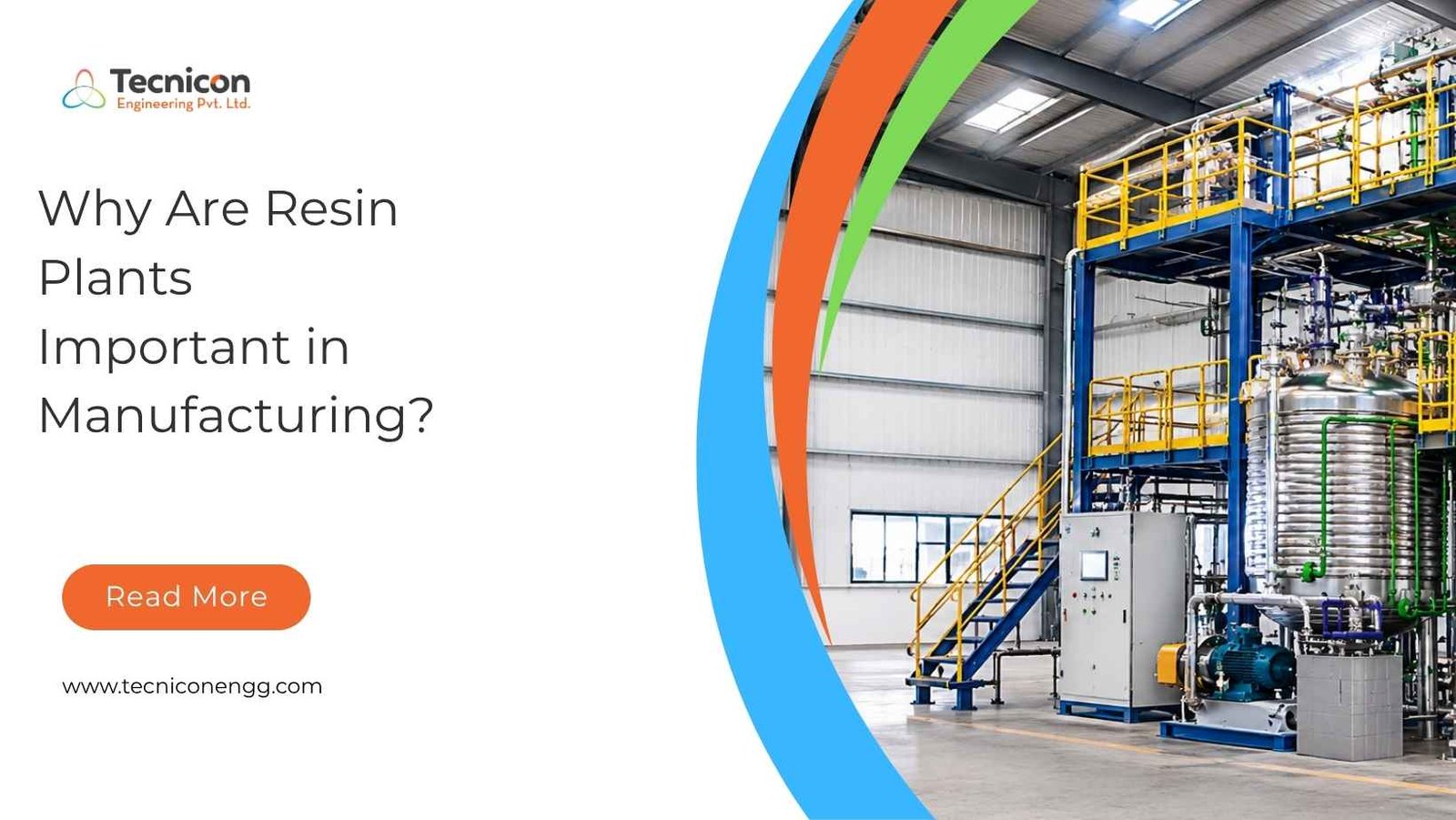
Why Are Resin Plants Important in Paints and Chemical Manufacturing?
Resins are essential raw materials used in the manufacturing of paints, coatings, adhesives, and various chemical products. They provide important properties such as adhesion, durability, chemical resistance, flexibility, and surface protection. To produce these materials with consistent quality and controlled formulations, manufacturers depend on specialized industrial resin plants.
A resin manufacturing plant is an industrial facility designed to produce different types of resins through controlled chemical reactions and polymerization processes. These facilities use specialized equipment, including reactor vessels, condensers, mixing tanks, heat transfer systems, and storage tanks, to manage the complete resin manufacturing process.
From epoxy and polyester resins to alkyd resins, a well-designed resin production plant helps manufacturers maintain product consistency, improve production efficiency, and meet the increasing requirements of the paint, coating, and chemical industries.
What Is a Resin Manufacturing Plant?
A resin manufacturing plant is a specialized chemical processing facility where raw materials undergo controlled chemical reactions to produce synthetic or modified resins.
The manufacturing process involves combining specific raw material compositions under controlled reaction temperatures, operating pressures, and mixing conditions. Depending on the resin formulation, the process may include polymerization, condensation, heating, cooling, catalyst addition, solvent handling, and filtration.
An industrial resin plant is designed to manage these operations efficiently while maintaining the required resin viscosity, reaction time, and final product quality.
Different Types of Resin Manufacturing Plants
Different industries require different resin formulations based on their applications and performance requirements.
1. Epoxy Resin Production Plant
An epoxy resin production plant manufactures resins widely used in protective coatings, industrial flooring, adhesives, electrical applications, and composite materials. These resins are valued for their adhesion properties, chemical resistance, and mechanical strength.
2. Polyester Resin Production Plant
Polyester resin production equipment is used to manufacture resins for fiberglass products, automotive components, construction materials, and industrial coatings.
3. Alkyd Resin Production Plant
An alkyd resin production system is commonly used in paint manufacturing. Alkyd resins provide film formation, surface adhesion, gloss, and durability in different paint and coating applications.
Why Are Resin Plants Important in Paint Manufacturing?
Resins play a major role in determining the performance and quality of finished paints and coatings. A properly designed resin plant for paint manufacturing helps maintain consistent resin formulations and supports large-scale production.
1. Improves Paint Adhesion and Film Formation
Resins act as binders in paint formulations. They help pigments and other ingredients adhere to surfaces while forming a continuous protective film after application and curing.
The quality of the resin directly influences adhesion properties, coating strength, and the overall appearance of the finished paint.
2. Enhances Coating Durability
Industrial coatings must withstand environmental exposure, moisture, chemicals, and mechanical stress.
Resins contribute to coating durability and chemical resistance. A controlled resin manufacturing process helps produce materials with the required performance characteristics for decorative paints, protective coatings, and industrial applications.
3. Supports Consistent Paint Formulations
Paint manufacturers require consistent raw materials to maintain product quality across production batches.
A batch resin production system allows manufacturers to control raw material composition, catalyst addition, reaction time, and temperature conditions. This helps maintain uniform resin viscosity and predictable performance in paint formulations.
How Does a Resin Production Plant Work?
A resin production plant uses specialized chemical processing equipment to convert raw materials into finished resin products through controlled chemical reactions.
1. Raw Material Handling and Preparation
The process begins with the selection and preparation of raw materials according to the required resin formulation.
Materials are transferred into the production system using suitable handling equipment. Accurate measurement and controlled addition help maintain the desired chemical composition.
2. Chemical Reaction and Polymerization
Prepared raw materials enter a chemical reaction vessel or polymerization reactor system.
The reaction takes place under controlled temperature, pressure, and mixing conditions. Depending on the resin type, catalysts and other additives may be introduced to achieve the desired molecular structure and product characteristics.
3. Heating, Cooling, and Temperature Control
Heat transfer efficiency is important during resin production because chemical reactions often require specific temperature conditions.
Industrial reactor and condenser systems help manage heating and cooling requirements. A suitable temperature control system maintains stable reaction conditions and helps prevent overheating or unwanted variations in product quality.
4. Mixing, Processing, and Filtration
A resin mixing and processing unit helps maintain uniform material distribution throughout the production process.
After the required reaction is completed, the resin may undergo cooling, vacuum treatment, filtration, or other finishing operations depending on its formulation.
5. Storage and Packaging
The finished resin is transferred into suitable resin storage tanks before packaging or further processing. Proper storage arrangements help maintain product quality and support efficient material handling.
What Equipment Is Required for an Industrial Resin Plant?
A resin processing plant requires specialized industrial chemical processing equipment to manage different stages of production.
1. Reactor Vessel
The reactor vessel is the main component of a resin manufacturing unit. It provides the controlled environment required for chemical reactions and polymerization.
A stainless steel reactor vessel with a suitable mixing arrangement can be selected according to material compatibility, reactor vessel capacity, and operating conditions.
2. Mixing Tank with Agitator
A mixing tank with agitator helps blend raw materials, additives, solvents, and other ingredients. Proper agitator speed and mixing efficiency support uniform resin formulations.
3. Industrial Condenser System
Condensers help recover vapours generated during heating and chemical reactions. They are integrated with reactor systems to manage vapour handling and support process efficiency.
4. Heat Transfer System
Heat transfer equipment helps regulate reaction temperatures during heating and cooling operations. Proper thermal management supports consistent resin production and efficient energy consumption.
5. Vacuum and Filtration Systems
A vacuum system for resin production may be used for moisture removal, solvent recovery, or degassing, depending on the process requirements. Resin filtration equipment helps remove unwanted particles before final storage.
How Does a Customized Resin Plant Improve Production Efficiency?
A customized industrial resin plant is designed according to the manufacturer’s production capacity, resin formulation, raw material composition, and operational requirements.
Some important advantages include:
- Better Process Control: Customized reactor systems help regulate reaction temperature, operating pressure, and reaction time.
- Improved Mixing Efficiency: Suitable agitator configurations support uniform mixing and consistent resin viscosity.
- Higher Production Capacity: Equipment sizing and plant layout can be planned according to batch processing or continuous production requirements.
- Reduced Energy Consumption: Efficient heating and cooling arrangements help optimize energy usage.
- Better Plant Automation: Automated monitoring and control systems support accurate process management.
- Improved Product Consistency: Controlled processing conditions help maintain consistent resin properties across batches.
These advantages make customized engineering an important consideration when developing a resin manufacturing plant for industrial applications.
How to Choose the Right Resin Plant Manufacturer in India?
Selecting an experienced resin plant manufacturer is essential for developing reliable production facilities that meet specific manufacturing requirements.
Before choosing a manufacturer, consider the following factors:
- Engineering Expertise: Evaluate experience in chemical plant design, reactor engineering, and resin production systems.
- Equipment Manufacturing: Check capabilities in manufacturing reactor vessels, condensers, mixing tanks, and storage equipment.
- Customization: Ensure the manufacturer can design equipment according to resin formulation, production capacity, and operating conditions.
- Material Selection: Review material compatibility, corrosion resistance, and suitable stainless steel specifications.
- Automation and Integration: Evaluate temperature control, process monitoring, and plant automation capabilities.
- Fabrication and Quality: Check manufacturing facilities, welding quality, inspection procedures, and applicable engineering standards.
Businesses looking for a resin plant manufacturer in India should also consider turnkey engineering, equipment installation, commissioning, and technical support.
For manufacturers in Gujarat, working with a chemical resin plant manufacturer Gujarat or industrial resin plant supplier Ahmedabad can help with equipment coordination, customized fabrication, and project execution.
Conclusion
Resin plants are essential for producing high-quality resins used in paints, coatings, adhesives, and various chemical manufacturing applications. They provide the specialized equipment and controlled processing environment required for consistent resin formulation, polymerization, and production.
From reactor vessels and condensers to mixing tanks, heat transfer systems, and filtration equipment, every component contributes to the performance of an industrial resin production facility.
Choosing an experienced resin plant manufacturer in India helps businesses develop customized production systems that match their manufacturing requirements, improve production efficiency, and maintain consistent product quality. Investing in properly engineered resin manufacturing equipment also supports long-term operational reliability and the growing demands of the paint and chemical industries.