
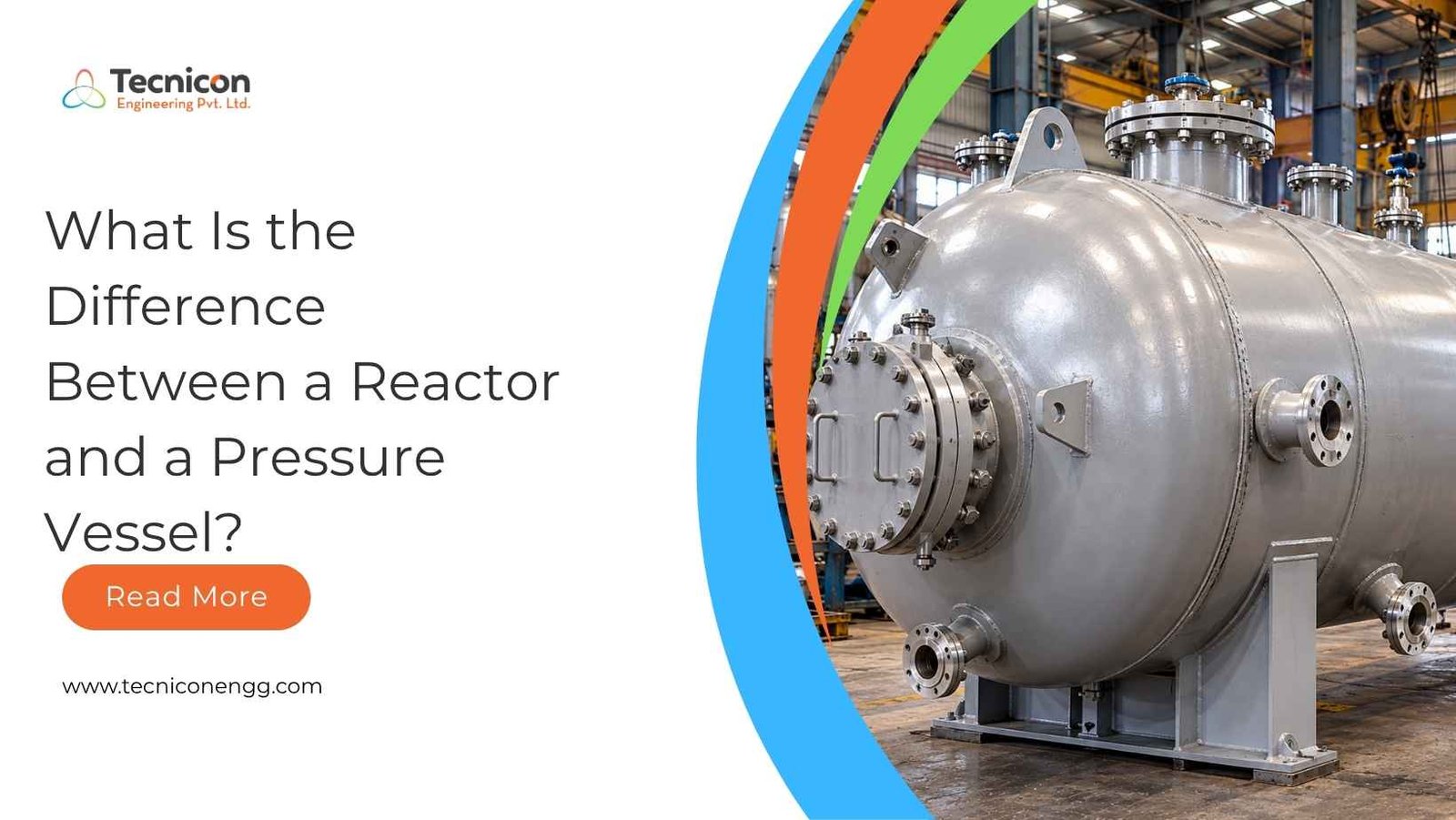
What Is the Difference Between a Reactor and a Pressure Vessel?
The main difference between a reactor and a pressure vessel is purpose. A chemical reactor is designed to carry out a chemical reaction under controlled conditions, while a pressure vessel is designed to safely contain gases or liquids at a pressure different from the surrounding atmosphere. A reactor is often built as a pressure vessel, but not every pressure vessel is a reactor.
This distinction matters when you are specifying equipment, comparing quotations, or deciding which design standards apply. how a reactor vs pressure vessel comparison works, where the two overlap, and how to choose between them.
What Is a Chemical Reactor?
A chemical reactor is a process vessel in which reactants are converted into products through a chemical reaction. Its design focuses on controlling the reaction conditions: temperature, pressure, mixing, residence time, and heat removal or addition.
A typical industrial reactor includes:
- A shell and heads, usually cylindrical
- A jacket, limpet coil, or internal coil for heat transfer
- An agitation system, such as a reactor with agitator and mechanical seal
- Nozzles for charging, sampling, instrumentation, and discharge
- Safety devices and temperature or pressure instruments
A reactor vessel is used in pharmaceuticals, agrochemicals, dyes, polymers, and specialty chemicals. Common forms include the jacketed reaction vessel, stirred tank reactor, and high pressure reactor.
What Is a Pressure Vessel?
A pressure vessel is a closed container built to hold gases or liquids at a pressure significantly different from ambient pressure. Its main job is pressure containment, not reaction.
An industrial pressure vessel may serve as:
- An air receiver or compressed gas storage tank
- A separator or knockout drum
- A heat exchanger shell
- A storage vessel for liquefied gases
- A surge or buffer vessel in a process line
Pressure vessel equipment can be a vertical pressure vessel or a horizontal pressure vessel, depending on the duty, available space, and process requirements. A cylindrical pressure vessel is the most common shape because it distributes stress efficiently.
Is a Chemical Reactor a Pressure Vessel?
Often, yes. A reactor operating above or below atmospheric pressure is a pressure vessel in terms of mechanical design, and it must follow applicable pressure vessel standards. Many reactors are designed and fabricated to codes such as ASME, or equivalent standards used in the region.
The reverse is not true. A storage tank or separator that holds pressure but performs no reaction is a pressure vessel, not a reactor. Likewise, an atmospheric reaction vessel running at low pressure may fall outside strict pressure vessel rules, though good engineering practice still applies.
Key Differences Between a Reactor and a Pressure Vessel
| Factor | Chemical Reactor | Pressure Vessel |
| Primary purpose | Carry out a chemical reaction | Contain pressure safely |
| Design focus | Reaction control, mixing, heat transfer | Pressure containment and structural integrity |
| Internals | Agitator, baffles, coils, jacket | Usually minimal, sometimes trays or demisters |
| Heat transfer | Usually essential | Often not required |
| Agitation | Common | Rare |
| Typical use | Synthesis, polymerization, crystallization | Storage, separation, receiving |
| Complexity | Higher, process-driven | Lower, code-driven |
Design Considerations Compared
Reactor Design
Reactor design starts with the chemistry. Engineers consider reaction heat, viscosity, phase behavior, operating temperature, and chemical compatibility. These factors drive the choice of jacket type, agitator style, seal arrangement, and nozzle layout. Heat transfer requirements and the agitation system are often as important as wall thickness.
Pressure Vessel Design
Pressure vessel design is driven by design pressure, design temperature, corrosion allowance, and applicable codes. Shell thickness, head type, nozzle reinforcement, and support structure are calculated to keep stress within allowable limits. Inspection and testing, including hydrostatic testing, are central to approval.
Because a reactor must satisfy both sets of requirements, it combines process design with pressure containment design.
Material Selection and Construction
Both equipment types depend on correct material selection. Common options include mild steel, stainless steel construction, and alloys for harsher duties.
- Mild steel reaction vessel: Suitable for non-corrosive services
- SS 304 reaction vessel: Used for mildly corrosive or hygienic applications
- SS 316 reaction vessel: Preferred where chlorides or aggressive media are present
A stainless steel reactor vessel or corrosion resistant vessel should be selected after checking compatibility with every chemical, cleaning agent, and operating condition. The same grade will not suit every process.
How to Decide Which One You Need
Ask these questions:
- Does a chemical reaction take place inside? If yes, you need a chemical reactor.
- Is the equipment only storing, separating, or holding fluids under pressure? A pressure vessel is likely sufficient.
- Do you need heating, cooling, or mixing? These features point toward a reactor.
- What are the operating pressure and temperature? High values require code-compliant pressure design in either case.
Share your process data, design conditions, and applicable standards with the manufacturer so the equipment is specified correctly.
Choosing a Manufacturer in India
Reactors and pressure vessels both depend on fabrication quality. Look for qualified welders, documented weld procedures, material test certificates, and inspection and pressure testing capability. Experience in both reactor design and fabrication and pressure vessel design and manufacturing is valuable, since reactors combine both disciplines.
Gujarat is one of India’s major chemical and engineering regions, so a reactor and pressure vessel manufacturer in India based in Ahmedabad or elsewhere in Gujarat can make drawing reviews, workshop inspections, and after-sales support easier. Whether you need a custom reactor manufacturer in Ahmedabad or a pressure vessel supplier in Gujarat, check experience with similar duties before finalizing.
Conclusion
A reactor and a pressure vessel are related but not identical. A reactor exists to run a chemical reaction under controlled conditions, while a pressure vessel exists to contain pressure safely. Most reactors qualify as pressure vessels, but most pressure vessels are not reactors.
Understanding this difference helps you specify the right equipment, apply the correct standards, and avoid design gaps. If you are planning new process equipment, discussing your requirements with an experienced chemical process equipment manufacturer in India is a practical first step toward a safe and efficient design.